Some thoughts on AI and college and career decisions
AI is already in college and career decisions. The question is whether it bridges the structural advising gap families face — or drives it farther apart.
We updated our value-added earnings metric — the WAR for colleges. The model now separates what students bring in, what a school offers through its program mix and market position, and what remains unexplained. Here is how we built it, and what it shows for five Illinois schools.
A big part of the decision of what college to go to is framed around whether or not you'll make good money coming out of it, or whether you'll get a good return on investment for your troubles. We've talked about this extensively this
We mapped supply and demand for college graduates across 391 US metro areas. The pipeline fills just 62% of annual openings nationwide.
The standard graduation rate excludes most students. Federal data shows the real number is 28 points higher at schools like UTRGV. Here's what the metric actually measures — and what it misses.
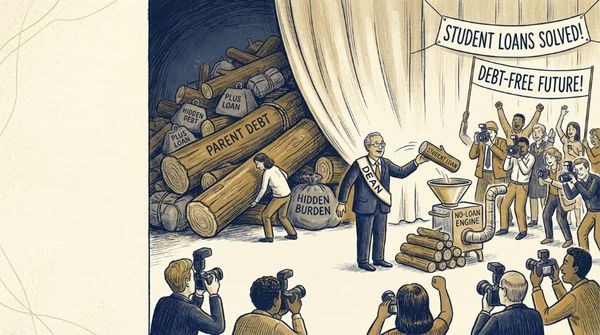
How many loans would a no-loan school loan, if a no-loan school could give loans? If you said the answer was zero, you'd be wrong. In reality it's over 20,000 families with over a billion dollars in parent loans outstanding (across the 28 institutions with
Parent PLUS loans hide a second debt burden. We analyzed debt burdens to show how family finances change when parents borrow too—and who gets squeezed.
A risk framework for evaluating college debt: Green Zone, Blue Zone, Yellow Zone, Red Zone. Which schools are worth the bet?
Financial GPS is a new framework for navigating college debt. See how payment burden tiers work, why ROI metrics fall short, and how to find schools where debt actually works.
I want to start Part 3 with something that's been on my mind: the power of example, and the danger of leaving things unsaid. I sometimes sense a hesitance among many to talk about the downsides of college. The worry is that acknowledging the risks might discourage people
400,000 families a year can't afford their Parent PLUS loans. At private universities, 58% are underwater. Here's what return on investment calculations miss.
The median college grad breaks even by 27. But at the same school, net price can vary by $50K+ based on income. Here's what the affordability debates miss.